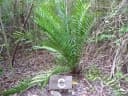
Zamia integrifolia
Zamia integrifolia
Safety & Hazards
The fleshy seeds contain a toxic glycoside that causes headaches, vomiting, stomach pains and diarrhoea if ingested[ 293 Title Poisonous Plants of North Carolina Publication Author Website http://www.ces.ncsu.edu/depts/hort/consumer/poison/poison.htm Publisher Year 0 ISBN Description An excellent concise but comprehensive guide to toxic plants that grow in N. Carolina. It lists even those plants that are of very low toxicity, including several well-known food plants such as carrots and potatoes. ]. The juice from the plant is very poisonous[ 46 Title Dictionary of Economic Plants. Publication Author Uphof. J. C. Th. Publisher Weinheim Year 1959 ISBN - Description An excellent and very comprehensive guide but it only gives very short descriptions of the uses without any details of how to utilize the plants. Not for the casual reader. ]. The starch obtained from the stem is poisonous unless thoroughly cooked[ 331 Title Flora of Guatemala Publication Author Standley P.C. & J. A. Steyermark Website http://www.archive.org/ Publisher Year 1946 - 1976 ISBN Description A superb reference, though somewhat dated. Gives lots of plant uses as well as information on plant habit and habitat. The entire flora (13 volumes) can now be downloaded from http://www.archive.org/ ].
Botanical Description
Zamia integrifolia is an evergreen plant producing a crown of 2 - 15 fern-like leaves 20 - 100cm long from a usually subterranean and tuberous stem that is 3 - 10cm in diameter, occasionally to 25cm[ 270 Title Flora of N. America Publication Author Website http://flora.huh.harvard.edu/fna/ Publisher Year 0 ISBN Description An on-line version of the flora with an excellent description of the plant including a brief mention of plant uses. , 990 Title The Cycad Pages Publication Author Website http://plantnet.rbgsyd.nsw.gov.au/PlantNet/cycad/wlist.html Publisher Royal Botanic Gardens, Sydney. Year 2012 ISBN Description A website dedicated to the various species of Cycad, with a comprehensive description of all the known species (as of 2012). At present (2015), the site is still running but is no longer being updated ]. Younger plants produce a single crown of leaves, older plants are usually multi-headed[ 1935 Title The Cycads Publication Author Whitelock L.M. Publisher Timber Press; Portland, Oregon Year 2002 ISBN 0-88192-522-5 Description An excellent book dealing with the eleven different genera and almost 300 species of plants we know as Cycads. There are detailed descriptions and a host of other information for each species. ] The starch-rich stems and roots were a main source of flour for the native peoples of southeastern N. America, and some people still prepare it today. These peoples are attributed with increasing the plant’s distribution. The plants were exploited on a commercial basis for the production of starch in the 19th and early 20th century, but this led to huge population losses of the Cycads to the point where there were no longer sufficient plants to make it profitable to exploit them[ 338 Title IUCN Red List of Threatened Species Publication Author Website http://www.iucnredlist.org/ Publisher Year 0 ISBN Description A list of plants under threat and facing possible extinction, usually with brief details of the threats and information on habitat. , 1935 Title The Cycads Publication Author Whitelock L.M. Publisher Timber Press; Portland, Oregon Year 2002 ISBN 0-88192-522-5 Description An excellent book dealing with the eleven different genera and almost 300 species of plants we know as Cycads. There are detailed descriptions and a host of other information for each species. ]. The plant is grown as an ornamental in gardens[ 277 Title Plants Database Publication Author Website http://plants.usda.gov/java/factSheet Publisher United States Department of Agriculture Year 0 ISBN Description An online database with an excellent collection of fact sheets about native N. American plants. ]. The species is abundant across its range but has declined substantially in parts of Florida over the past 90 years (estimated at 20%) mainly due to habitat destruction for housing developments and agriculture. It has therefore been classified as 'Near Threatened' in the IUCN Red List of Threatened Species(2011)[ 338 Title IUCN Red List of Threatened Species Publication Author Website http://www.iucnredlist.org/ Publisher Year 0 ISBN Description A list of plants under threat and facing possible extinction, usually with brief details of the threats and information on habitat. ].