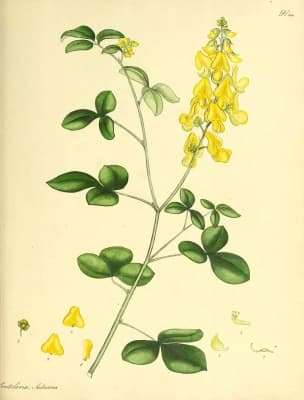
Crotalaria saltiana
Crotalaria saltiana
Safety & Hazards
No specific mention of toxicity has been seen for this species, but many members of this genus are known to contain pyrrolizidine alkaloids, the most potent of which in this genus are monocrotaline, retrorsine and retronecine[ 1309 Title The Leguminosae; A Source Book of Characteristics, Uses and Nodulation Publication Author Allen O.N.; Allen E.K. Publisher University of Wisconsin Year 1981 ISBN 0-333-32221-5 Description An amazing and comprehensive work, giving a brief guide to the many genera of the family Fabaceae and also the principle uses of the genus. ]. These alkaloids have a cumulative effect upon the body and, unless concentrations in a plant are high, occasional consumption is generally completely safe. Pyrrolizidine alkaloids are derived from amino acids including ornithine. Many of these alkaloids have pronounced hepatic toxicity, but the lungs and other organs may be affected as well. Mutagenic and carcinogenic activities of pyrrolizidine alkaloids have also been reported[ 299 Title Protabase - Plant Resources of Tropical Africa. Publication Author Website http://www.prota.org Publisher Year 0 ISBN Description An excellent on-line database with detailed information on over 3,200 species of useful plants of Africa. ].
Botanical Description
Crotalaria saltiana is a bushy white-hairy short-lived perennial herb growing 30 - 70 cm tall, sometimes with spreading procumbent branches from near the base[ 328 Title African Flowering Plants Database Publication Author Website http://www.ville-ge.ch/musinfo/bd/cjb/africa/recherche.php Publisher Conservatoire et Jardin Botaniques. Year 0 ISBN Description Contains information on over 150,000 plant names (including synonyms) giving a description and habitat, plus a distribution map. ]. The plant is sometimes gathered from the wild for the fibre in its stems, which is used locally,