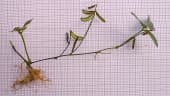
Calopogonium mucunoides
Calopogonium mucunoides
Safety & Hazards
None known
Botanical Description
Calopogonium mucunoides is a short-lived, vigorous, creeping, twining or trailing herb, that can send out stems up to several metres long and form a tangled mass of foliage 30 - 50 cm deep[ 310 Title Plant Resources of Southeast Asia Publication Author Website http://proseanet.org/ Publisher Year 0 ISBN Description Lots of information on the uses of the plants of SE Asia. ]. The plant is often grown as a green manure in the tropics[ 310 Title Plant Resources of Southeast Asia Publication Author Website http://proseanet.org/ Publisher Year 0 ISBN Description Lots of information on the uses of the plants of SE Asia. ]. Calopo was introduced into tropical Africa and Asia in the early 1900s and to Australia in the 1930s. It was taken into use as a green manure and cover crop in Sumatra in 1922 and soon thereafter in the rubber and sisal plantations of the central and eastern parts of Java. It was then brought to Malaysia as a cover crop for rubber. Calopo became naturalized in Indonesia and Malaysia, and has spread to most humid tropical areas of the world.