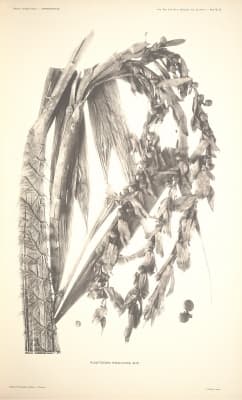
Plectocomia himalayana
Plectocomia himalayana
Safety & Hazards
None known
Botanical Description
Plectocomia himalayana is a spiny, evergreen, climbing palm usually producing a cluster of stems (though sometimes solitary) up to 20 metres long and 10cm in diameter - these can climb high into the surrounding trees. The stems are unbranched for most of their length but can then branch freely to form entanglements in the tree canopy[ 328 Title African Flowering Plants Database Publication Author Website http://www.ville-ge.ch/musinfo/bd/cjb/africa/recherche.php Publisher Conservatoire et Jardin Botaniques. Year 0 ISBN Description Contains information on over 150,000 plant names (including synonyms) giving a description and habitat, plus a distribution map. , 1968 Title Palms of Southern Asia Publication Author Henderson A. Publisher Princeton University Press, New York Year 2009 ISBN 978-0-691-13449-9 Description An excellent concise guide ] The plants are harvested from the wild for local use as a food and source of materials for basketry, ropes etc. The plant is common and widespread in its natural range. No major threats are known to affect it at present, though its common use as a vegetable and as a source of weaving material mean it is usually rare near villages and paths. In addition, some of its habitats, such as the tropical forest habitat in south Yunnan, is being destroyed as a result of large-scale permanent and commercial agriculture. The plant is classified as 'Least Concern' in the IUCN Red List of Threatened Species(2013)[ 338 Title IUCN Red List of Threatened Species Publication Author Website http://www.iucnredlist.org/ Publisher Year 0 ISBN Description A list of plants under threat and facing possible extinction, usually with brief details of the threats and information on habitat. ].