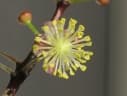
Codiaeum variegatum
Codiaeum variegatum
Safety & Hazards
This species may be poisonous if consumed in large quantities[ 713 Title Australian Tropical Rainforest Plants Publication Author Website http://www.anbg.gov.au/cpbr/cd-keys/rfk/index.html Publisher Year 0 ISBN Description An online resource giving botanical information, and a little bit about plant usage, for over 2,700 species of plants found in the Australian rainforest. ]. The bark, roots, latex and leaves are poisonous, containing the toxin called 5-deoxyingenol. Chewing the bark and roots is said to cause burning of the mouth[ 350 Title National Tropical Botanical Garden Publication Author Website http://ntbg.org/plants/choose_a_plant.php Publisher Year 0 ISBN Description General information on almost 400 species, with descriptions, habitats and some uses. ]. The latex has caused eczema in some gardeners after repeated exposure[ 350 Title National Tropical Botanical Garden Publication Author Website http://ntbg.org/plants/choose_a_plant.php Publisher Year 0 ISBN Description General information on almost 400 species, with descriptions, habitats and some uses. ].
Botanical Description
Codiaeum variegatum is an evergreen shrub or a small tree branching from low down; it can grow up to 3 metres tall but is usually smaller in cultivation[ 372 Title Flowers of India Publication Author Website http://www.flowersofindia.net/ Publisher Year 0 ISBN Description A wed site of native Indian plants, plus cultivated and naturalized species. It has good quality photos and terse details on more than 3,000 species and cultivars. ]. The plant is sometimes harvested from the wild for local medicinal use. It is often grown as an ornamental in gardens, being especially valued for its vast range of variegated-leaf cultivars.