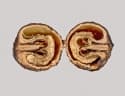
Anamirta cocculus
Anamirta cocculus
Safety & Hazards
The seed, when taken internally, is a powerful poison for all vertebrates affecting the central nervous system, stimulating the motor and inhibitory centres in the medulla, especially the respiratory and vagus centres, acting on the heart and respiration[ 310 Title Plant Resources of Southeast Asia Publication Author Website http://proseanet.org/ Publisher Year 0 ISBN Description Lots of information on the uses of the plants of SE Asia. ]. It also irritates motor centres, either in the cerebrum or in the medulla and cord, producing in all vertebrates alternating epileptiform spasms, with periodic stoppage of the motions of the diaphragm and slowness of the pulse[ 310 Title Plant Resources of Southeast Asia Publication Author Website http://proseanet.org/ Publisher Year 0 ISBN Description Lots of information on the uses of the plants of SE Asia. ]. The poisoning causes vomiting, purging, profuse sweating and intoxication, with extreme giddiness, dimness of vision and unconsciousness[ 310 Title Plant Resources of Southeast Asia Publication Author Website http://proseanet.org/ Publisher Year 0 ISBN Description Lots of information on the uses of the plants of SE Asia. ]. Breathing and the pulse become weak. The poisoning also results in chronic convulsions; during spasms and intervals of relaxations the pupils correspondingly contract or dilate[ 310 Title Plant Resources of Southeast Asia Publication Author Website http://proseanet.org/ Publisher Year 0 ISBN Description Lots of information on the uses of the plants of SE Asia. ]. Death occurs rapidly from respiration failure, or slowly from gastro-intestinal symptoms[ 310 Title Plant Resources of Southeast Asia Publication Author Website http://proseanet.org/ Publisher Year 0 ISBN Description Lots of information on the uses of the plants of SE Asia. ].
Botanical Description
Poison berry is a large, dioecious climbing plant, with stems up to 15 metres long. These stems scramble over the ground and twine into other plants for support, the stems twining to the left[ 310 Title Plant Resources of Southeast Asia Publication Author Website http://proseanet.org/ Publisher Year 0 ISBN Description Lots of information on the uses of the plants of SE Asia. ]. The plant is not usually cultivated, but is often harvested from the wild for its medicinal uses[ 310 Title Plant Resources of Southeast Asia Publication Author Website http://proseanet.org/ Publisher Year 0 ISBN Description Lots of information on the uses of the plants of SE Asia. ].