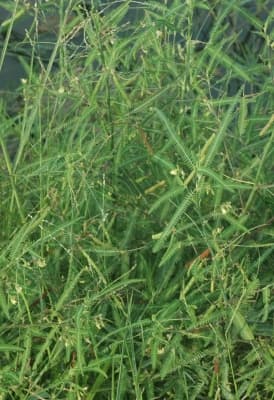
Aeschynomene aspera
Aeschynomene aspera
Safety & Hazards
None known
Botanical Description
Aeschynomene aspera is a shrub growing about 2 metres tall[ 272 Title Plants and People of Nepal Publication Author Manandhar. N. P. Publisher Timber Press. Oregon. Year 2002 ISBN 0-88192-527-6 Description Excellent book, covering over 1,500 species of useful plants from Nepal together with information on the geography and peoples of Nepal. Good descriptions of the plants with terse notes on their uses. ]. This species is one of the main sources of ambatch wood. The pithy wood from the stems is very light and is used to make art paper products, artificial flowers, and as a cork substitute for making a range of articles[ 272 Title Plants and People of Nepal Publication Author Manandhar. N. P. Publisher Timber Press. Oregon. Year 2002 ISBN 0-88192-527-6 Description Excellent book, covering over 1,500 species of useful plants from Nepal together with information on the geography and peoples of Nepal. Good descriptions of the plants with terse notes on their uses. , 1309 Title The Leguminosae; A Source Book of Characteristics, Uses and Nodulation Publication Author Allen O.N.; Allen E.K. Publisher University of Wisconsin Year 1981 ISBN 0-333-32221-5 Description An amazing and comprehensive work, giving a brief guide to the many genera of the family Fabaceae and also the principle uses of the genus. ]. Aeschynomene aspera s widespread in the region and there is no evidence of specific threats. The plant is classified as 'Least Concern' in the IUCN Red List of Threatened Species(2011)[ 338 Title IUCN Red List of Threatened Species Publication Author Website http://www.iucnredlist.org/ Publisher Year 0 ISBN Description A list of plants under threat and facing possible extinction, usually with brief details of the threats and information on habitat. ].