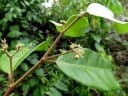
Dichapetalum timoriense
Dichapetalum timoriense
Safety & Hazards
None known
Botanical Description
Dichapetalum timoriense has two distinctive growth phases. When young, it is a low shrub growing about 70cm tall, but as it grows older it adopts a climbing habit, twining into other plants for support[ 550 Title Kakadu Threatened Flora Report Vol. 3 Publication Author Cowie I. Publisher Year 2005 ISBN Description A report to Parks Australia North from the Northern Territory Government Department Infrastructure, Planning and Environment. It gives information on a number of threatened species in northern Australia. ]. The plant is sometimes harvested from the wild for its edible fruit and leaves, and also for the fibre obtained from its stems - all of which are used locally. The plant is considered to be 'Vulnerable' in parts of its range in northern Australia[ 550 Title Kakadu Threatened Flora Report Vol. 3 Publication Author Cowie I. Publisher Year 2005 ISBN Description A report to Parks Australia North from the Northern Territory Government Department Infrastructure, Planning and Environment. It gives information on a number of threatened species in northern Australia. ].