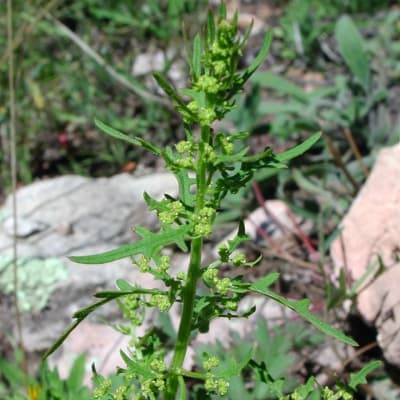
Chenopodium graveolens
Chenopodium graveolens
Safety & Hazards
The leaves and seeds of all members of this genus are more or less edible. However, many of the species in this genus contain saponins, though usually in quantities too small to do any harm. Although poisonous, saponins also have a range of medicinal applications and many saponin-rich plants are used in herbalism (particularly as emetics, expectorants and febrifuges) or as sources of raw materials for the pharmaceutical industry. Saponins are also found in a number of common foods, such as many beans. Saponins have a quite bitter flavour and are in general poorly absorbed by the human body, so most pass through without harm. They can be removed by carefully leaching in running water. Thorough cooking, and perhaps changing the cooking water once, will also normally remove most of them. However, it is not advisable to eat large quantities of raw foods that contain saponins. Saponins are much more toxic to many cold-blooded creatures, such as fish, and hunting tribes have traditionally put large quantities of them in streams, lakes etc in order to stupefy or kill the fish and make them easy to catch[ K Title Plants for a Future Author Ken Fern Description Notes from observations, tasting etc at Plants For A Future and on field trips. ]. The plants also contain some oxalic acid, which in large quantities can lock up some of the nutrients in the food. However, even considering this, they are very nutritious vegetables in reasonable quantities. Cooking the plants will reduce their content of oxalic acid. People with a tendency to rheumatism, arthritis, gout, kidney stones or hyperacidity should take especial caution if including this plant in their diet since it can aggravate their condition[ 238 Title Encyclopaedia of Herbs and their Uses. Publication Author Bown. D. Publisher Dorling Kindersley, London. Year 1995 ISBN 0-7513-020-31 Description A very well presented and informative book on herbs from around the globe. Plenty in it for both the casual reader and the serious student. Just one main quibble is the silly way of having two separate entries for each plant. ].
Botanical Description
Chenopodium graveolens is a strongly scented annual plant growing 20 - 90cm tall. The plant is sometimes unbranched, sometimes with side branches[ 331 Title Flora of Guatemala Publication Author Standley P.C. & J. A. Steyermark Website http://www.archive.org/ Publisher Year 1946 - 1976 ISBN Description A superb reference, though somewhat dated. Gives lots of plant uses as well as information on plant habit and habitat. The entire flora (13 volumes) can now be downloaded from http://www.archive.org/ ]. The plant is harvested from the wild for its edible leaves and seed, which are eaten locally.