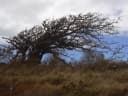
Erythrina sandwicensis
Erythrina sandwicensis
Safety & Hazards
All Erythrina species contain greater or lesser amounts of toxic alkaloids - these can be found in all parts of the plant but are usually most concentrated in the seeds. Concentrations vary from species to species, in some it is low enough that the plant is safely used as a food. In many, the alkaloids are utilized for their medicinal effects. We have no specific information on the concentration of the alkaloids in this species, but care should be exercised in any use of the plant that involves ingestion. These alkaloids have a curare-like action (obtained from Strychnos species) and can cause paralysis and even death by respiratory failure[ 1309 Title The Leguminosae; A Source Book of Characteristics, Uses and Nodulation Publication Author Allen O.N.; Allen E.K. Publisher University of Wisconsin Year 1981 ISBN 0-333-32221-5 Description An amazing and comprehensive work, giving a brief guide to the many genera of the family Fabaceae and also the principle uses of the genus. , K Title Plants for a Future Author Ken Fern Description Notes from observations, tasting etc at Plants For A Future and on field trips. ].
Botanical Description
Erythrina sandwicensis is a deciduous tree with a spreading, light crown that is wider than it is high; it can grow from 5 - 15 metres tall. The short bole is stout, crooked or gnarled; it can be very spiny and 30 - 90cm in diameter[ 303 Title World Agroforesty Centre Publication Author Website http://www.worldagroforestry.org/ Publisher Year 0 ISBN Description An excellent online database of a huge range of trees giving very good information on each plant - its uses, ecology, identity, propagation, pests etc. , 350 Title National Tropical Botanical Garden Publication Author Website http://ntbg.org/plants/choose_a_plant.php Publisher Year 0 ISBN Description General information on almost 400 species, with descriptions, habitats and some uses. ]. The plant is harvested from the wild for local use as a medicine and source of wood and dyestuff. It is sometimes used to form barriers and is planted in reforestation projects on badly eroded soils in Hawaii.