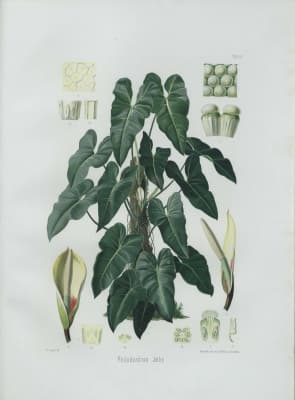
Philodendron imbe
Philodendron imbe
Safety & Hazards
Although no specific mention has been seen for this species, it belongs to a family where most of the members contain calcium oxalate crystals. This substance is toxic fresh and, if eaten, makes the mouth, tongue and throat feel as if hundreds of small needles are digging in to them. However, calcium oxalate is easily broken down either by thoroughly cooking the plant or by fully drying it and, in either of these states, it is safe to eat the plant. People with a tendency to rheumatism, arthritis, gout, kidney stones and hyperacidity should take especial caution if including this plant in their diet[ 238 Title Encyclopaedia of Herbs and their Uses. Publication Author Bown. D. Publisher Dorling Kindersley, London. Year 1995 ISBN 0-7513-020-31 Description A very well presented and informative book on herbs from around the globe. Plenty in it for both the casual reader and the serious student. Just one main quibble is the silly way of having two separate entries for each plant. ].
Botanical Description
Philodendron imbe is a vigorous, evergreen, climbing shrub growing up to 5 metres tall with long, aerial rooting stems trailing down to the ground[ 472 Title Aroids: Plants of the Arum Family. Publication Author Bown D. Publisher Timber Press; Portland, Oregon. Year 2000 ISBN 0-88192-485-7 Description An excellent treatment of the family Araceae, giving lots of information about the plants, how to grow them, their uses etc. I found it a bit disordered - if you want all the information on a specific species you have to trawl through the whole book. ]. The aerial roots are gathered from the wild and used locally as a source of material for making ropes, baskets etc. The plant is often grown as an ornamental, with some named forms having been developed.