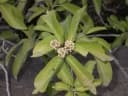
Lepisanthes senegalensis
Lepisanthes senegalensis
Safety & Hazards
The seed is said to be poisonous in quantity[ 308 Title Flora Zambesiaca Publication Author Website http://apps.kew.org/efloras/fz/intro.html Publisher Year 0 ISBN Description An excellent online flora of plants from the Zambezi River basin. It lists a number of the plant uses as well as the habitats and botanical descriptions of the plants. ]. The flowers are used as a fish poison[ 398 Title Edible Wild Plants of Tanzania Publication Author Ruffo, C.K.: Birnie, A. & Tengnas, B. Publisher Regional Land Management Unit; Nairobi. Year 2002 ISBN 9966-896-60-0 Description A very well presented, simple guide to growing and utilizing wild food plants in Tanzania, with line drawings of each plant, a description, habitat and range, non-food as well as food uses, plus basic information on growing the plants. ]. The plant contains saponins and some reports suggest that the fruit is poisonous, whilst others say that they are all right to eat[ 610 Title Flora of Tropical East Africa Publication Author Beentje H.J. Website http://plants.jstor.org/search?st=396814 Publisher Royal Botanic Gardens; Kew. Year 2002 ISBN Description Available on-line, a modern flora of East Africa. ]. Although poisonous, saponins are poorly absorbed by the human body and so most pass through without harm. Saponins are quite bitter and can be found in many common foods such as some beans. They can be removed by carefully leaching in running water. Thorough cooking, and perhaps changing the cooking water once, will also normally remove most of them. However, it is not advisable to eat large quantities of food that contain saponins. Saponins are much more toxic to some creatures, such as fish, and hunting tribes have traditionally put large quantities of them in streams, lakes etc in order to stupefy or kill the fish[ K Title Plants for a Future Author Ken Fern Description Notes from observations, tasting etc at Plants For A Future and on field trips. ].
Botanical Description
Lepisanthes senegalensis is an evergreen shrub or tree with a dense, spreading crown; it can grow up to 16 metres tall. The plant exceptionally adopts a more climbing habit[ 328 Title African Flowering Plants Database Publication Author Website http://www.ville-ge.ch/musinfo/bd/cjb/africa/recherche.php Publisher Conservatoire et Jardin Botaniques. Year 0 ISBN Description Contains information on over 150,000 plant names (including synonyms) giving a description and habitat, plus a distribution map. , 451 Title Flora Malesiana Series 1 Publication Author Various Website http://www.archive.org Publisher Nationaal Herbarium Nederiand, Universiteit Leiden branch Year 0 ISBN Description A massive treatment of the plants of the Malaysian Archipelago. Much of it has been made available to download from the Internet ].The short bole is up to 44cm in diameter[ 451 Title Flora Malesiana Series 1 Publication Author Various Website http://www.archive.org Publisher Nationaal Herbarium Nederiand, Universiteit Leiden branch Year 0 ISBN Description A massive treatment of the plants of the Malaysian Archipelago. Much of it has been made available to download from the Internet ]. The tree is harvested from the wild as a local source of food, medicines and various commodities.